How Hospitals can Save Lives and Themselves: Lessons on Patient Flow from the COVID-19 Pandemic
This paper laid out IHO methodology and tested strategies that surgical and hospital leaders can use to overcome clinical and financial strain from the pandemic. Learn more >
What's New
Optimizing hospital flow will be critical during and post-pandemic as hospitals are trying to ramp elective surgeries back up.
Learn strategies to reduce variability through specific interventions to dramatically improve capacity, eliminate boarding, and improve flow. Learn More >
Who are you?




Resources
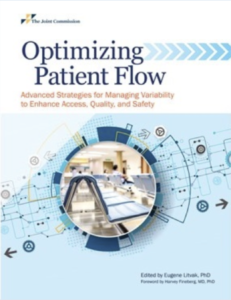
Joint Commission Resources Book
The IHO’s approach to managing variability in healthcare delivery is the central theme of Joint Commission Resources’ new book.
Learn More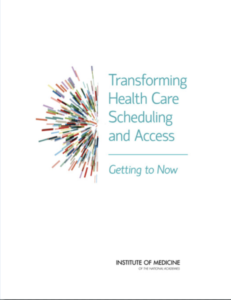
IOM Report: Transforming Health Care Scheduling and Access
The Institute of Medicine (IOM) recommended IHO Variability Methodology as one of the six principles to address the compelling issue of access to healthcare.
Learn MoreQuality and Safety Corner
The Institute for Healthcare Optimization’s approach to managing variability in healthcare delivery addresses some of the most intractable quality and safety issues such as:
- Nurse Staffing
- Physician Staffing
- Readmissions
- Inpatient Mortality
- Patient Safety
- Boarding and Diversion
- Hospital Overcrowding
- Rapid Response Teams
Healthcare Cost Corner
Hospital costs can be decreased by millions of dollars annually by adopting the Institute for Healthcare Optimization’s approach to managing variability in healthcare delivery.
Learn MoreCase Study
See how one hospital increased annual revenue by $137M, and avoided $100M in cost, while improving quality of care.
ROI Estimator
Estimate Your Hospital's ROI
This ROI estimator will show you some of the potential incremental surgical volume and financial benefits from Phase I of Operating Room redesign at your hospital.
Try Now